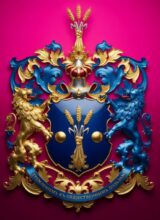

From the uprising of 1825 to the struggle for political freedom in modern Russia — a history of constitutional aspirations, resistance to autocracy, and the enduring legacy of Sergey Mouravieff-Apostol.
The Russia That Might Have Been
On a freezing December morning in 1825, a group of Russian military officers gathered in Senate Square in Saint Petersburg to challenge the foundations of imperial autocracy. They were not peasants driven to rebellion by hunger, nor foreign revolutionaries seeking to overthrow an unfamiliar government. They were members of Russia’s own educated elite: officers, aristocrats, veterans of the Napoleonic Wars, and men who had served the empire they now sought to transform.
History would remember them as the Decembrists.
Their uprising failed. Their leaders were imprisoned, exiled, or executed. The imperial government survived, and the constitutional transformation they had sought was postponed.
Yet the Decembrists introduced a fundamental challenge to the political order of imperial Russia: the conviction that the state should be governed by laws rather than the unrestricted will of a sovereign, that hereditary privilege should not determine a person’s rights, and that serfdom was incompatible with human dignity.
Their movement was neither ideologically uniform nor democratic in the modern sense. Some envisioned a constitutional monarchy, others a republic. Their proposed constitutions differed considerably in their treatment of political representation, citizenship, and the future structure of the Russian state.
Nevertheless, their revolutionary organizations represented one of the earliest organized attempts by members of the Russian elite to replace autocratic government with a constitutional political system.
Among their most prominent leaders was Sergey Ivanovich Mouravieff-Apostol, an officer whose participation in the uprising of the Chernigov Regiment would ultimately lead him to the gallows.
The history of the Decembrists is therefore more than the history of an unsuccessful military rebellion. It is the story of an early constitutional movement whose aspirations would reappear throughout the following two centuries, in different forms and under dramatically different circumstances.
To understand their significance, one must return to the Russian Empire at the beginning of the nineteenth century, when the possibilities of political reform appeared to be opening across Europe while the Russian imperial state remained committed to preserving the authority of the throne.
I. The Russian Empire and the Problem of Absolute Power
At the beginning of the nineteenth century, the Russian Empire was one of Europe’s largest and most powerful states. Its armies had helped defeat Napoleon, its diplomatic influence extended across the continent, and its emperors participated in shaping the political settlement that followed the Napoleonic Wars.
Yet beneath this international prestige lay a political and social system profoundly different from the constitutional arrangements developing elsewhere in Europe.
The emperor exercised extensive authority over legislation, administration, the military, and the institutions of government. Russia possessed no national representative parliament capable of independently restraining the sovereign.
Millions of peasants remained bound by serfdom, a system that subjected them to the authority of landowners and imposed severe restrictions on their personal freedom.
The contradiction became increasingly apparent to Russian officers who had participated in the campaigns against Napoleon.
Having witnessed political institutions and social arrangements in Western Europe, some began questioning why the country that had helped defeat Napoleon could not establish constitutional limits on its own ruler.
The problem was not simply that the Russian Empire lacked a constitution. It was that political reform depended overwhelmingly upon the sovereign’s willingness to surrender or limit powers that the existing system placed in his hands.
Alexander I had entertained constitutional ideas during parts of his reign. His government introduced constitutional arrangements in the Kingdom of Poland in 1815, and reform proposals were discussed for the empire itself. Nevertheless, no comparable constitutional system was established for Russia as a whole.
The emergence of the Decembrist movement reflected growing frustration among officers who no longer believed that meaningful political transformation could depend exclusively upon imperial initiative.
II. The Birth of the Decembrist Movement
The Decembrists did not begin as a single revolutionary party.
Their movement developed through a network of secret societies formed by officers and members of the educated nobility in the years following the Napoleonic Wars.
These organizations provided spaces in which participants could discuss political reform, the abolition of serfdom, the responsibilities of government, and the future of the Russian Empire.
Among the early organizations were the Union of Salvation, established in 1816, and the Union of Prosperity, formed in 1818.
Their membership included individuals who differed over the pace, methods, and ultimate objectives of reform.
Some believed that Russia could be transformed through gradual changes introduced by the monarchy. Others increasingly concluded that the existing political order would have to be replaced.
By 1821, two principal revolutionary organizations had emerged: the Northern Society, centered in Saint Petersburg, and the Southern Society, whose activities were concentrated among army officers stationed in the territories of present-day Ukraine.
The Northern Society included prominent figures such as Nikita Muravyov, Kondraty Ryleyev, and Sergei Trubetskoy.
The Southern Society was associated with Pavel Pestel, Alexei Yushnevsky, and Sergey Mouravieff-Apostol.
Although these organizations shared opposition to autocratic government and serfdom, their constitutional programs were not identical.
Northern Society
A constitutional monarchy
Nikita Muravyov’s constitutional project proposed limiting the monarch’s authority through a constitution, establishing representative institutions, abolishing serfdom, and reorganizing the empire along federal lines. Political participation would nevertheless remain restricted by property qualifications.
Southern Society
A republic
Pavel Pestel’s Russkaya Pravda proposed abolishing the monarchy, establishing a republic, ending serfdom, and creating a centralized state. His program also envisaged a powerful provisional government during the transition, raising questions about how revolutionary authority would be constrained.
These were competing constitutional projects, not a single agreed blueprint for modern democracy.
The differences between the two societies are essential to understanding the Decembrists’ place in history.
They were not simply seeking a change of emperor. Their political programs addressed the organization of government, the legal status of individuals, the distribution of political authority, and the abolition of a social institution that denied freedom to millions.
At the same time, their movement was rooted largely in the officer corps and aristocracy rather than a broad popular electorate. Its members did not share a fully developed modern understanding of universal political equality.
Their historical significance lies in the constitutional questions they raised and the organized political challenge they mounted against imperial absolutism.
III. Sergey Mouravieff-Apostol: From Imperial Officer to Revolutionary Leader of Ukrainian decent

Sergey Ivanovich Mouravieff-Apostol
1796–1826
Russian imperial officer, veteran of the Napoleonic Wars, leader of the Southern Society’s Vasilkov branch, and commander of the Decembrist uprising of the Chernigov Regiment.
Sergey Ivanovich Mouravieff-Apostol, also transliterated as Sergei Muravyov-Apostol, was born on September 28, 1796, according to the Gregorian calendar, into a distinguished family of the Russian imperial nobility.
His father, Ivan Matveyevich Mouravieff-Apostol, served as a diplomat and writer. His mother, Anna Semyonovna Chernoevich, came from a prominent family.
Sergey received part of his education in France, an experience that exposed him to European intellectual and political traditions during a period shaped by the aftermath of the French Revolution and the rise of Napoleon.
He subsequently entered military service and participated in the campaigns against Napoleon, including the Patriotic War of 1812.
His military career placed him among a generation of Russian officers who had experienced the contradictions between the empire’s international role and its domestic political institutions.
For Mouravieff-Apostol, opposition to autocracy eventually became more than an intellectual position.
He joined the secret reformist movement and became a prominent participant in the Southern Society, taking responsibility for its Vasilkov branch.
His younger brother, Matvei, was also involved in the Decembrist movement. Another brother, Ippolit, would participate in the Chernigov Regiment uprising and die during its suppression.
The involvement of the Mouravieff-Apostol brothers illustrates the personal consequences of revolutionary political activity within the Russian Empire.
Their participation placed their military careers, social standing, personal freedom, and ultimately their lives at risk.
The officer who challenged the institution he served
Mouravieff-Apostol’s position was particularly significant because he belonged to the imperial military establishment.
The armed forces were among the principal institutions through which the emperor maintained authority across the empire.
Military officers swore allegiance to the sovereign and were expected to preserve the existing political order.
For officers who joined the Decembrist movement, revolutionary activity therefore involved a fundamental conflict between their military obligations and their political convictions.
The Decembrists’ decision to organize within the army reflected their belief that military participation would be necessary to bring about constitutional change.
It also exposed a central limitation of their strategy: the political future of the empire would initially be decided through the actions of military units rather than through a broadly representative civilian process.
This tension would become especially apparent during the events of December 1825.
IV. December 1825: The Uprising in Senate Square
The death of Emperor Alexander I in November 1825 created a succession crisis.
His brother Constantine had previously renounced his right to the throne, but the arrangement had not been publicly clarified. Consequently, uncertainty surrounded the succession before Nicholas I assumed power.
The Decembrists recognized the crisis as an opportunity to challenge the imperial system.
On December 14, 1825, according to the Julian calendar then used in Russia — December 26 in the Gregorian calendar — several thousand soldiers assembled in Senate Square in Saint Petersburg.
The insurgents refused to swear allegiance to Nicholas I.
Their leaders intended to use the military demonstration to force a political transformation, but the uprising suffered from inadequate coordination, uncertain leadership, and the failure of important military units to join the rebellion.
Nicholas I ordered loyalist forces to suppress the uprising.
Artillery was eventually deployed against the insurgents, bringing the confrontation to a violent conclusion.
The uprising failed to remove the emperor or establish a constitutional government. Arrests followed, and the imperial authorities began investigating the revolutionary organizations.
The events in Saint Petersburg, however, did not immediately end the Decembrist movement.
Hundreds of kilometers to the south, in the territory of present-day Ukraine, Sergey Mouravieff-Apostol and his associates prepared a second uprising.
V. The Chernigov Regiment (Ukraine): Mouravieff-Apostol’s Final Campaign
The uprising of the Chernigov Regiment began after news of the failed revolt in Saint Petersburg reached members of the Southern Society.
Sergey Mouravieff-Apostol had already been arrested by officers loyal to the imperial government. Fellow conspirators freed him, and the revolt began on December 29, 1825, according to the Gregorian calendar.
The insurgents assembled troops and attempted to expand the rebellion by securing the participation of additional military units.
Mouravieff-Apostol and his associates sought to transform an isolated regimental revolt into a wider challenge to the imperial government.
Their hopes depended upon the willingness of other soldiers and officers to join them.
That support did not materialize on the scale required.
On January 3, 1826, according to the Julian calendar — January 15 in the Gregorian calendar — loyalist forces defeated the insurgents near Ustymivka, in present-day Ukraine.
Mouravieff-Apostol was wounded and captured.
His brother Ippolit died during the confrontation.
The defeat ended the final major armed phase of the Decembrist uprising.
For Sergey Mouravieff-Apostol, the failure of the rebellion marked the beginning of his final months in imperial custody.
VI. The Five Executions: July 1826
Following the suppression of the uprisings, the imperial government conducted an extensive investigation into the Decembrist organizations.
Hundreds of individuals were questioned, and numerous participants received sentences involving imprisonment, forced labor, exile, or military punishment.
Five leading Decembrists were sentenced to death:

Pavel Pestel
Leader of the Southern Society and author of Russkaya Pravda.

Kondraty Ryleyev
Poet and prominent leader of the Northern Society.
Sergey Mouravieff-Apostol
Southern Society leader and commander of the Chernigov Regiment uprising.

Mikhail Bestuzhev-Ryumin
Southern Society organizer and participant in the Chernigov Regiment uprising.

Pyotr Kakhovsky
Northern Society participant who killed General Mikhail Miloradovich during the uprising in Saint Petersburg.
On July 13, 1826, according to the Gregorian calendar, the five men were executed by hanging at the Peter and Paul Fortress in Saint Petersburg.
The execution was marked by a notorious malfunction: the ropes holding three of the condemned men broke during the initial attempt.
Contemporary accounts differ over particular details of the incident and the words attributed to the prisoners.
The authorities nevertheless proceeded with the executions.
Sergey Mouravieff-Apostol was twenty-nine years old.
His death, together with those of his four fellow Decembrists, became a defining episode in the history of Russian revolutionary opposition.
The imperial government had eliminated the principal leaders of the rebellion, but it could not eliminate the political questions that had brought the movement into existence.
What limits should exist on executive authority? Who should participate in government? Could serfdom be reconciled with the principle of personal freedom? What constitutional arrangements could prevent the arbitrary exercise of state power?
These questions would remain central to Russia’s political development long after the executions of 1826.
VII. The Decembrists and the Origins of Russian Constitutionalism
The executions of 1826 did not end the Decembrists’ influence on Russian political thought.
Their rebellion became a reference point for subsequent generations of reformers, intellectuals, and political activists who questioned the legitimacy of unlimited imperial authority.
The Decembrists had articulated ideas that would continue to shape debates about Russia’s political future: constitutional government, the abolition of serfdom, the relationship between the state and the individual, and the possibility of replacing hereditary autocracy with representative institutions.
Their movement also demonstrated the difficulty of achieving political transformation through a relatively small network of military conspirators.
The uprising had not emerged from a nationwide representative movement. Its organizers disagreed over fundamental constitutional questions, and their strategy depended upon military support that ultimately proved insufficient.
These limitations help explain both the failure of the rebellion and the continuing historical debate over its significance.
The Decembrists can be understood as early founders of Russia’s organized constitutional opposition, although they did not establish a democratic state and did not share a single conception of democracy.
Their legacy belongs to the history of constitutional thought and political resistance rather than to the founding of an enduring constitutional government.
VIII. From the Decembrists to the Revolution of 1905

The political questions raised in 1825 remained unresolved for much of the nineteenth century.
Nicholas I’s reign was characterized by strict political supervision and the continued concentration of authority in the monarchy.
His successor, Alexander II, introduced major reforms, most notably the emancipation of the serfs in 1861. Yet emancipation did not establish a constitutional monarchy or a nationally representative government capable of independently controlling the executive.
Political opposition continued to develop through liberal reform movements, revolutionary organizations, and emerging political parties.
The Revolution of 1905 eventually forced Nicholas II to make constitutional concessions.
The October Manifesto promised civil liberties and a legislative role for an elected State Duma. The Fundamental Laws of 1906 established a revised constitutional framework, but the emperor retained extensive executive powers, including authority over ministers and significant control over the legislative process.
Russia had acquired representative institutions without becoming a parliamentary monarchy comparable to Britain.
The political conflicts between the emperor, the Duma, reformers, and revolutionary movements continued until the collapse of the monarchy in February 1917.
The end of the Romanov dynasty did not resolve the struggle over Russia’s political future.
The provisional government that emerged in 1917 was overthrown by the Bolsheviks later that year. The subsequent civil war and consolidation of Soviet power produced a political system fundamentally different from the constitutional alternatives envisioned by the Decembrists.
The Soviet Union eventually established its own constitutional framework, but the Communist Party maintained a monopoly over political authority, and independent political competition remained severely restricted.
The historical sequence was not an uninterrupted continuation of the imperial system. The Russian Empire, Soviet Union, and contemporary Russian Federation possessed different ideologies, institutions, economic structures, and political objectives.
Nevertheless, the recurring concentration of executive authority and restrictions on independent political opposition provide important subjects for comparison across these periods.
IX. America and Russia: Two Different Constitutional Histories

Philadelphia, 1787

Saint Petersburg, 1825
The American and Decembrist revolutions emerged in different historical circumstances.
The American Revolution began as a conflict between Britain’s North American colonies and the British Crown. The Decembrist uprising was an internal challenge to an established empire by members of its own military and aristocratic elite.
Yet both movements confronted questions about political legitimacy, the limits of executive power, and the relationship between government and the governed.
The United States declared independence in 1776, adopted its federal Constitution in 1787, and ratified the Bill of Rights in 1791.
The constitutional settlement established a federal republic with a separation of powers, representative institutions, and a written framework governing the exercise of political authority.
Its adoption was the product of negotiations, disagreements, and compromises among the representatives of the states.
American constitutional development was nevertheless incomplete at the founding.
Slavery continued, women were excluded from national electoral participation, and the political rights of many Americans were restricted on grounds of race, property, and other qualifications.
The expansion of democratic participation required subsequent constitutional amendments, social movements, legislative reforms, and, in the case of slavery, a devastating civil war.
The American constitutional system therefore developed through a prolonged process of institutional change rather than through a single revolutionary achievement.
The contrasting institutional outcomes
|
United States |
Russian Empire |
|---|---|
|
Adopted a federal republican constitution in 1787. |
Retained an autocratic monarchy in 1825. |
|
Established elected legislative institutions and constitutional limits on executive power. |
Had no independent national representative legislature in 1825. |
|
Ratified a federal Bill of Rights in 1791. |
The Decembrists’ proposed constitutional guarantees were never enacted. |
|
Developed mechanisms for constitutional amendment and institutional succession. |
The imperial succession crisis of 1825 became the occasion for an attempted military revolt. |
The comparison illustrates the importance of constitutional institutions in shaping political development.
The American Constitution created a legal framework within which political conflicts could be contested and institutional changes pursued. That framework did not prevent slavery, discrimination, political violence, or constitutional crises, but it provided mechanisms that could be used to alter the system.
The Decembrists, by contrast, attempted to introduce constitutional government into a political order in which the sovereign retained the authority to suppress their movement.
Their defeat meant that the constitutional alternatives they proposed were never tested as functioning systems of government.
It is therefore impossible to establish what form of government Russia would have developed had the uprising succeeded.
A successful Decembrist revolt might have opened a path toward constitutional transformation, but its eventual outcome would have depended upon the resolution of disagreements among the revolutionaries, the response of the military and wider population, and the institutions subsequently established.
X. The Russian Federation: Constitutional Guarantees and Political Practice
The dissolution of the Soviet Union in 1991 marked another major turning point in Russian political history.
The Russian Federation adopted a new constitution in 1993, formally establishing a system of government with an elected president, a bicameral legislature, judicial institutions, and guarantees of fundamental rights.
The existence of a written constitution, however, does not by itself determine how political authority is exercised.
The relationship between constitutional provisions and political practice depends upon the independence of institutions, the ability of citizens to exercise their rights, the existence of genuine electoral competition, and the effective enforcement of legal limits on executive authority.
Under Vladimir Putin, who first became acting president at the end of 1999, political power has become increasingly concentrated in the presidency.
According to Freedom House’s 2026 assessment, Russia’s political system is characterized by restrictions on genuine opposition, extensive state influence over the media, limited judicial independence, and the use of state institutions to constrain political competition.
The organization also documents the intensification of restrictions on expression and political activity following Russia’s full-scale invasion of Ukraine in February 2022.
The Russian government’s position differs from that of international human rights organizations and opposition movements. Russian authorities present the existing constitutional order as legitimate and defend restrictions on political activity through appeals to national security, sovereignty, and domestic law.
The central constitutional question concerns whether citizens can effectively exercise the rights formally guaranteed to them and whether state institutions can independently constrain those holding executive power.
This question connects the contemporary debate about Russia’s political system to the constitutional concerns that motivated the Decembrists two centuries earlier.
XI. Alexei Navalny: Opposition, Imprisonment, and Death

Alexei Navalny became one of the most prominent figures in contemporary Russian opposition politics through his anti-corruption investigations, political organizing, and criticism of the Kremlin.
His political career unfolded in circumstances very different from those faced by the Decembrists.
Navalny operated in a formally constitutional republic with elections, political parties, and written guarantees of civil liberties. His activities nevertheless brought him into repeated conflict with Russian law enforcement and judicial authorities.
In August 2020, Navalny was poisoned with a nerve agent and subsequently received medical treatment in Germany.
He returned to Russia in January 2021 and was arrested.
His imprisonment continued despite international calls for his release and decisions by the European Court of Human Rights concerning the legal basis of his detention.
On February 16, 2024, Russian authorities announced that Navalny had died in a penal colony in the Arctic region.
His death prompted international demands for an independent investigation and accountability.
The findings concerning Navalny’s death
In February 2026, the United Kingdom, Sweden, France, Germany, and the Netherlands announced that they were confident Navalny had been poisoned with epibatidine, a highly toxic substance.
Their conclusion contradicted the Russian authorities’ account that he had died of natural causes.
The European Union subsequently cited the joint statement in a June 2026 regulation imposing restrictive measures on individuals and an entity associated with Navalny’s persecution, poisoning, and death.
Separately, on February 3, 2026, the European Court of Human Rights ruled that Russia had violated Navalny’s right to life, his right to liberty and security, and the prohibition of inhuman or degrading treatment in connection with his detention.
The judgment addressed the circumstances of his imprisonment, including the authorities’ failure to respond adequately to the risks he had raised concerning his health and life.
These findings establish a substantial documented basis for examining the Russian state’s responsibility for Navalny’s treatment and death. They do not, by themselves, establish the individual criminal responsibility of every official alleged to have been involved.
Two centuries apart
The deaths of Sergey Mouravieff-Apostol and Alexei Navalny occurred in different political and legal contexts.
Mouravieff-Apostol was executed following his participation in an armed military rebellion against an absolute monarchy.
Navalny died in state custody after years of opposition political activity, criminal proceedings, and imprisonment in the Russian Federation.
The differences matter. The two men did not pursue identical political programs, operate under comparable legal systems, or employ the same methods.
Their histories nevertheless invite examination of the relationship between political opposition and state power.
Both became prominent opponents of the governments under which they lived. Both were deprived of liberty by those governments, and both died while subject to state authority.
Their stories also demonstrate that the existence of formal political institutions does not automatically ensure the protection of political rights.
XII. The Decembrists’ Place in Russian Historical Memory

The Decembrists have occupied different places in Russian historical memory.
Imperial authorities regarded their actions as rebellion against the sovereign and the established political order.
Later generations of Russian intellectuals and reformers interpreted the movement through the history of constitutionalism, political opposition, and the abolition of serfdom.
Soviet historiography frequently emphasized the Decembrists’ revolutionary opposition to the monarchy, while interpreting their movement within a broader narrative of class struggle and revolutionary development.
Contemporary historians examine the Decembrists through a wider range of perspectives, including their constitutional projects, aristocratic backgrounds, military strategy, intellectual influences, and relationship with the societies of the multinational Russian Empire.
Their political programs also require attention to the imperial context in which they were developed. The question of national self-determination, particularly in territories governed by the Russian Empire, was not resolved consistently or uniformly within the movement.
The Decembrists were products of their historical circumstances, and their constitutional aspirations should not be confused with every principle associated with contemporary liberal democracy.
Nevertheless, their opposition to unlimited monarchical authority and serfdom made them important participants in the early history of organized Russian constitutional thought.
The execution of five leaders in 1826 ensured that their names would remain associated with one of the most consequential confrontations between imperial authority and constitutional opposition in nineteenth-century Russia.
The Unfinished Constitutional Question
Two hundred years after the Decembrist uprising, the questions raised by the movement remain relevant to the study of Russian political history.
What is the proper relationship between the individual and the state? How can executive authority be limited? What institutions are necessary to protect civil liberties? How can political opposition participate in public life without facing arbitrary punishment?
The Decembrists confronted these questions within an absolute monarchy.
Later generations confronted them under the imperial constitutional arrangements of the early twentieth century, the Soviet political system, and the institutions of the post-Soviet Russian Federation.
The American constitutional experience provides a contrasting historical example of a republic that developed mechanisms for institutional continuity, political competition, and constitutional amendment, while also undergoing profound conflicts over the scope and application of democratic rights.
The Russian experience illustrates how constitutional reform can be interrupted, reversed, or constrained by the concentration of political authority.
Neither history was predetermined.
The Decembrists did not know whether their uprising would succeed. Nor could they have anticipated the revolutions, wars, political transformations, and constitutional debates that would follow over the next two centuries.
Their historical significance rests in the fact that they organized an explicit challenge to the political foundations of imperial autocracy and proposed alternative constitutional arrangements.
Sergey Mouravieff-Apostol’s life and death remain part of that history.
His participation in the Southern Society, his leadership of the Chernigov Regiment uprising, and his execution in 1826 place him among the central figures of Russia’s early constitutional opposition.
The Decembrists did not found a democratic Russian state. They helped establish a political tradition in which the authority of the ruler could be questioned, the abolition of serfdom could become an organized political objective, and the constitutional reorganization of the state could be imagined as an alternative to imperial absolutism.
Their unfinished project remains an important subject for understanding the history of constitutionalism in Russia and the recurring struggle over the limits of state power.
Historical note: Dates relating to the Decembrist uprising are given in the Gregorian calendar unless otherwise specified. Russia used the Julian calendar until 1918, creating a twelve-day difference for events in 1825–1826.