From Sugar Millions to the Common Good: How One of Eastern Europe’s Wealthiest Families Became One of Its Greatest Philanthropic Dynasties


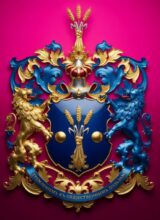
The Tereshchenko philanthropic world: the family coat of arms and its motto “Aspiring for the Common Good”; Mykola Tereshchenko; the Khanenko Museum; and the National Art Museum of Ukraine.
There are families remembered for the fortunes they accumulated. Others survive in history because of the palaces they built, the companies they controlled or the political influence they wielded.
The Tereshchenko Dynasty belongs to a rarer category.
They became enormously wealthy—but then spent extraordinary amounts of that wealth building institutions intended for people they would never meet.
Hospitals.
Schools.
Gymnasiums.
Universities.
Orphanages.
Maternity shelters.
Workers’ housing.
Museums.
Art schools.
Churches.
Public cultural institutions.
Scientific and archaeological projects.
And some of the most important art collections ever assembled in Ukraine.
Beginning in the nineteenth century, the Ukrainian Tereshchenko family rose from the Cossack-burgher environment of Hlukhiv into the highest circles of commerce, industry and society. Their agricultural estates eventually extended across roughly 153,000 hectares, and by the early twentieth century the family controlled major sugar enterprises and belonged among the largest landowning and industrial families of the Russian Empire.
Yet the family’s historical importance cannot be measured simply by factories, land or bank accounts.
The other Tereshchenko empire was built from public institutions.
And its motto said almost everything:
“Прагнення суспільного добра” — “Striving for the Common Good.”
The phrase appeared on the family coat of arms and became strikingly appropriate for a dynasty whose members repeatedly converted private industrial wealth into public infrastructure, education, medicine and culture.
Wealth on an Imperial Scale — Philanthropy on the Same Scale

Industry and responsibility: a historic Tereshchenko sugar enterprise and the family’s heraldic tradition. Sugar created the fortune; philanthropy helped define what the family did with it.
The foundations of the dynasty were laid by Artemii Yakovych Tereshchenko, whose commercial success grew through trade and later through sugar production and manufacturing. His sons Mykola, Fedir and Semen expanded the enterprise into one of the great industrial fortunes of nineteenth-century Ukraine.
By the beginning of the twentieth century, the family controlled extensive estates and numerous sugar refineries; their commercial interests reached well beyond a single province and connected Ukrainian production to broader imperial and European markets.
But an unusual expectation appears to have existed inside the family: wealth carried obligations.
Historical accounts preserved by Kyiv Polytechnic Institute describe a Tereshchenko family tradition according to which an exceptionally large share of income was directed toward public purposes—schools, shelters, hospitals and other institutions. The exact percentage sometimes quoted in later accounts should be treated as part of the family’s historical tradition rather than a modern audited calculation, but the surviving buildings, donations and institutional records leave little doubt about the extraordinary scale of the giving.
This was not philanthropy performed through an occasional charitable dinner.
The Tereshchenkos were building systems.
Hlukhiv: The City Where the Tereshchenko Philanthropic Model Was Born

Hlukhiv and the physical legacy of Tereshchenko patronage: the historic Fedir Tereshchenko City School, the Three-Anastasias Church associated with the family, and surviving Tereshchenko architecture.
Before Kyiv became the great stage of Tereshchenko philanthropy, there was Hlukhiv.
The family’s native city became almost a laboratory for their idea of socially responsible wealth.
Mykola Tereshchenko spent more than two decades in Hlukhiv municipal government, first serving as senior burgomaster and later as mayor. His involvement with the city therefore combined private philanthropy with direct civic responsibility.
With Tereshchenko money and support, Hlukhiv received an astonishing range of institutions.
Among them were a boys’ gymnasium, girls’ gymnasium, vocational school, boarding facilities for students, teachers’ institute, municipal hospital and orphanage. The family also supported charitable funds and social assistance for poorer residents.
The family’s charitable footprint in Hlukhiv alone has been estimated in historical accounts at roughly 1.5 million rubles, an enormous sum for the period. A municipal bank connected with Mykola Tereshchenko held capital whose interest helped support a hospital, orphanage and assistance for impoverished residents during major religious holidays.
Fedir Tereshchenko continued the same tradition. He served as trustee of institutions established by the family, supported the municipal hospital, and in 1891 acquired a building in Hlukhiv for a three-year vocational school preparing specialists for the sugar industry.
Education, welfare and industrial modernization were therefore not separate concerns.
The Tereshchenkos understood something remarkably modern: a prosperous economy required educated workers, trained professionals, healthy communities and functioning civic institutions.
Mykola Tereshchenko: “Old Mykola” and the Architecture of Generosity
Mykola Artemiiovych Tereshchenko (1819–1903), industrialist, civic figure and the most celebrated philanthropist of the dynasty; at right, his monument in Kyiv.
Among all members of the dynasty, Mykola Artemiiovych Tereshchenko became perhaps its most famous philanthropist.
After moving to Kyiv in the 1870s, he emerged as one of the city’s most important industrialists, civic figures, art patrons and benefactors.
The Vernadsky National Library of Ukraine notes that there was scarcely a major charitable or educational institution in Kyiv to which Mykola did not provide support in one form or another.
His documented charitable expenditure over his lifetime is commonly estimated at more than five million rubles—a staggering historical sum.
And the money did not disappear into ceremonial foundations bearing only his name.
It became buildings.
A Hospital for People Who Could Not Afford One
One of the clearest examples was the free hospital for workers established in Kyiv.
The city provided land; Mykola Tereshchenko financed construction and equipment.
Historical material from Kyiv Polytechnic Institute records that he spent approximately 137,000 rubles on construction and equipment, created an additional endowment of around 250,000 rubles for its support, and later financed further buildings for infectious, chronic and other patients.
The institution became connected with the medical complex that would eventually form part of the history of modern Okhmatdyt, one of Ukraine’s best-known children’s medical institutions.
The principle was simple but radical for its age:
medical treatment should not depend entirely upon wealth.
For a family that had become rich through industry, it was an extraordinary reinvestment of industrial wealth into the health of ordinary people.
Shelter, Maternity Care and Social Welfare
The Tereshchenkos also funded the kind of institutions that nineteenth-century societies often neglected.
Kyiv still preserves buildings from a charitable complex connected with Fedir Artemiiovych Tereshchenko, including former free apartments, a maternity shelter and a night shelter on Nyzhnii Val.
The family also supported the Mariinsky Orphanage, assistance for children, shelters and charitable organizations.
Their philanthropy therefore stretched across virtually an entire human life: childhood, education, employment, illness, maternity, poverty and old age.
That breadth is part of what distinguishes the Tereshchenko legacy.
They did not fund only glamorous monuments.
They funded the places people needed when they were vulnerable.
Education as the Great Tereshchenko Investment

Education as philanthropy: Kyiv Polytechnic Institute and a historic Tereshchenko school in Hlukhiv.
If there was one field the dynasty treated almost as a sacred responsibility, it was education.
Mykola supported numerous Kyiv educational establishments: gymnasiums, commercial schools, technical schools and vocational institutions.
Among the institutions receiving Tereshchenko assistance were the Kyiv First and Fourth Gymnasiums, the First Commercial School, the Kyiv Real School, trade schools and commercial classes.
But the family’s greatest contribution to higher technical education was connected with the creation of what is today the Igor Sikorsky Kyiv Polytechnic Institute.
When the project for a major Polytechnic Institute in Kyiv gained momentum during the 1890s, private industry was expected to contribute heavily to its foundation.
The Tereshchenkos answered spectacularly.
Mykola Tereshchenko and his sons pledged 150,000 rubles.
KPI’s own institutional history identifies the Tereshchenko contribution as the largest individual private monetary contribution toward the establishment of the new institution.
Total voluntary contributions for the institution reached slightly more than one million rubles, with the Kyiv City Duma supplying 300,000 and the Tereshchenko family 150,000.
Those numbers matter because the institution that resulted would eventually educate generations of engineers, scientists and technological pioneers.
The Tereshchenkos were not simply financing a building.
They were financing Ukraine’s future technological class.
Patronage of Art: Ivan Tereshchenko and the Making of Ukrainian Artists
Ivan Mykolayovych Tereshchenko (1854–1903), patron, collector and major supporter of artistic education in Kyiv.
The family’s educational philanthropy extended far beyond engineering.
Ivan Mykolayovych Tereshchenko, Mykola’s son, became an important patron of the arts and supporter of the Kyiv Drawing School created by Ukrainian artist and educator Mykola Murashko.
Historical research records that between 1875 and 1900 the Tereshchenko family spent approximately 150,000 rubles supporting Murashko’s school.
That support was particularly important because art education rarely produced the immediate financial returns of sugar factories, estates or banking.
It represented something else entirely:
investment in culture itself.
Ivan was also an important collector, assembling works by major Ukrainian and Russian artists of the nineteenth century.
The distinction between collecting and philanthropy gradually disappeared within the family.
They bought art privately.
Then their collections entered public cultural life.
The Tereshchenkos and the Birth of Kyiv’s Museum Culture

Two institutions central to Kyiv’s museum landscape: the National Art Museum of Ukraine and the Khanenko Museum.
One of the most extraordinary aspects of the family legacy is how deeply it became embedded in Kyiv’s museum landscape.
Even today, walking along Tereshchenkivska Street means walking through a district shaped by their cultural patronage.
The street has become associated with major institutions including the National Museum of Taras Shevchenko, Khanenko Museum and Kyiv Art Gallery, making the Tereshchenko name almost inseparable from the museum geography of central Kyiv.
Mykola and other members of the family supported the creation of the Kyiv Museum of Antiquities and Arts, an institutional predecessor connected with today’s National Art Museum of Ukraine.
The Tereshchenkos also helped finance archaeological expeditions and the acquisition and preservation of historical objects.
This was philanthropy operating at a civilizational level.
Hospitals preserved lives.
Schools created opportunities.
Museums preserved memory.
Varvara Tereshchenko Khanenko: Giving a World-Class Art Collection to Ukraine


Varvara Tereshchenko Khanenko and Bohdan Khanenko, followed by an interior of the museum created from their extraordinary collecting and philanthropic legacy.
Perhaps nowhere did the Tereshchenko tradition reach a more beautiful culmination than through Varvara Mykolayivna Tereshchenko, Mykola’s eldest daughter.
After marrying Bohdan Khanenko, she became one of Ukraine’s most important collectors, patrons and cultural benefactors.
The Khanenko Museum itself describes Varvara as the daughter of one of Ukraine’s wealthiest entrepreneurs and most generous philanthropists and notes that she inherited both her parents’ compassion and their passion for supporting others.
Together, Bohdan and Varvara spent more than forty years assembling an extraordinary collection.
They travelled through Vienna, Berlin, Paris, Madrid, Rome, Florence, Warsaw and other European cultural centres, acquiring European paintings, Asian art, ancient objects, sculpture, decorative arts, icons and archaeological treasures.
By the beginning of the twentieth century, their collection was regarded as one of the finest private art collections in the empire.
But the crucial part of the story is what happened next.
They did not intend simply to die surrounded by beautiful objects.
They intended to give them away.
When a Private Palace Became a Public Museum
The Khanenko Museum in Kyiv: a private residence transformed into a permanent public cultural institution.
The mansion associated with the future Khanenko Museum itself had Tereshchenko origins.
Mykola Tereshchenko purchased the property and later transferred the newly built house and part of the land to his daughter Varvara. The interiors were gradually designed almost as a “theatre of art history,” suitable for displaying the growing collection.
During the early twentieth century the Khanenkos donated thousands of objects to Kyiv’s first public museum.
Today objects originating from their collection are distributed among several major national museums.
Bohdan Khanenko’s 1917 will envisioned transferring the collection to the public.
After his death, Varvara carried the project forward.
In 1918, she formally transferred their collection, mansion and library to the Ukrainian Academy of Sciences, establishing the foundation for what became the Bohdan and Varvara Khanenko National Museum of Arts.
This is one of the purest expressions of philanthropy imaginable.
A family accumulated masterpieces from around the world—
and then transformed private ownership into public cultural inheritance.
Thousands of Objects, Not a Handful of Paintings
The scale was extraordinary.
The couple’s collecting interests encompassed European painting and sculpture, Asian art, classical antiquities, Ukrainian icons, folk art, weapons, archaeological finds and decorative art.
Historical records indicate that thousands of items entered public collections.
The National Museum of the History of Ukraine notes that the Khanenkos donated 3,145 objects to Kyiv’s early museum collection, representing more than half the estimated value of its holdings at the time.
Their collection ultimately helped enrich not merely one institution but several.
That means a museum visitor today may encounter the Tereshchenko legacy without even realizing it.
The dynasty effectively dispersed parts of its private cultural fortune into Ukraine’s national collections.
Building a National Museum


The National Art Museum of Ukraine—the monumental museum tradition to which Tereshchenko and Khanenko patronage contributed.
The family’s relationship with museums extended beyond donating objects.
Bohdan Khanenko, closely connected with the Tereshchenko industrial enterprise through Varvara and through his management of family business interests, headed the committee responsible for creating Kyiv’s first major city museum.
He helped oversee the construction of the museum building that today houses the National Art Museum of Ukraine.
Mykola Tereshchenko also contributed substantial funds toward the museum project.
The result was something Kyiv had badly needed: a permanent public institution capable of collecting, studying and displaying art, archaeology and historical heritage.
The industrial fortunes generated by nineteenth-century Ukrainian enterprise were therefore being converted into cultural institutions designed to survive the industrialists themselves.
Volodymyr Cathedral and Sacred Art

Sacred art and architecture: the historic interior of St. Volodymyr’s Cathedral in Kyiv and the Three-Anastasias Church in Hlukhiv.
The Tereshchenkos were also significant benefactors of religious architecture.
Mykola Tereshchenko contributed to St. Volodymyr’s Cathedral in Kyiv and supported other churches and religious projects.
This support mattered not simply because church construction was expensive.
Major late-nineteenth-century churches were also enormous cultural enterprises involving architects, painters, craftsmen, sculptors and icon painters.
Patronage of sacred architecture therefore simultaneously supported religion, public architecture and monumental art.
The Trinity People’s House: Culture for More Than the Elite
The Tereshchenko philanthropic model did not confine culture to aristocratic drawing rooms.
Mykola helped finance the Trinity People’s House, the historic building now associated with the Kyiv National Academic Theatre of Operetta.
People’s houses were conceived as cultural and educational centers accessible to wider sections of society.
This reflected another characteristic of Tereshchenko philanthropy:
their cultural patronage repeatedly moved from private wealth toward public access.
A painting should not necessarily remain in a mansion.
A performance should not necessarily be reserved for court circles.
Education should not necessarily belong only to the privileged.
That idea runs through the entire Tereshchenko story.
Recognition, Honors and International Prestige
Mykola Tereshchenko’s public activity brought substantial recognition.
He became an honorary citizen of Kyiv, while his distinctions included high state decorations and international recognition.
Yet perhaps the greatest honor was not a medal.
It was geography.
Kyiv eventually placed the Tereshchenko name permanently onto its map.
And the street bearing the family name became associated with precisely the institutions—museums, galleries, culture—that the family spent decades creating and supporting.
Not Charity From a Distance
There is an important distinction between donating money and building institutions.
The Tereshchenkos repeatedly did the latter.
Family members served on boards.
They acted as trustees.
They managed charitable funds.
They oversaw schools.
They participated in municipal government.
They collected art and catalogued it.
They supported archaeological research.
They helped organize museums.
They endowed hospitals.
They financed buildings and then supplied money for their continued operation.
This was institutional philanthropy before the modern philanthropic foundation became a standard instrument of elite wealth.
Their approach resembles what would later become common among major international industrial philanthropists: create wealth through industry, then convert portions of that wealth into universities, hospitals, libraries, museums, scientific organizations and cultural foundations.
A Ukrainian Parallel to the Great Philanthropic Dynasties of the Industrial Age
The nineteenth and early twentieth centuries created enormous industrial fortunes around the world.
Carnegie would finance libraries and universities.
Rockefeller would support medicine, science and education.
The Krupps created social programs around German industry.
The Rothschild family became famous for extensive cultural and charitable patronage across Europe.
Ukraine produced its own major traditions of industrial philanthropy as well—with the Tereshchenkos, Symyrenkos, Khanenkos and other entrepreneurial families financing education, culture, science and welfare.
Within that world, the Tereshchenkos occupy a particularly striking place because the variety of their philanthropy was so broad.
They did not choose one cause.
They helped build an urban civilization.
The Fortune. The Buildings.

The surviving physical legacy: Tereshchenko architecture and museums whose histories remain intertwined with the family’s patronage.
The political catastrophe of the twentieth century destroyed the world in which the Tereshchenkos had operated.
Revolution, Bolshevik nationalization, civil war and Soviet rule eliminated much of the family’s private property.
Collections were nationalized.
Homes became state institutions.
Family names were sometimes deliberately removed from museums and public memory.
The Khanenko Museum itself records that Soviet authorities removed the founders’ names from the institution in 1924 on ideological grounds; only much later was the historical identity properly restored.
The irony is extraordinary.
The Soviet state confiscated the property—
but continued using many of the institutions the supposed “bourgeois capitalists” had created.
Hospitals remained hospitals.
Schools continued educating students.
Museums continued displaying art.
Public buildings continued serving Kyiv.
The political system changed.
The philanthropy survived it.
Kyiv Is Still Full of Tereshchenko Money
That may be the most astonishing part of the entire story.
More than a century after Mykola Tereshchenko’s death, modern Kyiv still contains institutions whose origins are inseparable from Tereshchenko philanthropy.
A student enters a university whose creation their money helped finance.
A visitor walks into a museum whose building or collections were supported by the family.
A patient enters a medical complex whose history reaches back to a Tereshchenko charitable hospital.
An audience enters a theatre housed in a former people’s cultural institution supported by their philanthropy.
A tourist walks down Tereshchenkivska Street, surrounded by museums created from the cultural world their family helped build.
Their fortune became architecture.
And architecture became memory.
“Striving for the Common Good”
The motto and the people behind it: “Aspiring for the Common Good,” Mykola Tereshchenko and Varvara Tereshchenko Khanenko.
Many wealthy families have had mottos.
Few managed to leave behind one that reads so much like a description of what they actually did.
“Striving for the Common Good.”
The Tereshchenkos became wealthy through one of the great industrial transformations of nineteenth-century Ukraine.
But instead of treating wealth purely as a private destination, generation after generation redirected remarkable portions of it into society.
Artemii established the tradition.
Mykola transformed it into philanthropy on a monumental scale.
Fedir built and supported charitable institutions.
Ivan invested in artists and art education.
Varvara Tereshchenko Khanenko transformed family wealth and private collecting into a cultural inheritance belonging to Ukraine.
And through marriage, descendants and associated family foundations, the philanthropic ecosystem expanded even further.
The Tereshchenko Fortune Was Spent — and That Is Why It Survived
There is a strange paradox about great fortunes.
Money that remains locked inside private wealth can eventually disappear.
Companies collapse.
Currencies die.
Estates are confiscated.
Markets change.
Political systems fall.
But money transformed into a university can educate generations.
Money transformed into a hospital can save lives a century later.
Money transformed into a museum can preserve a civilization.
Money transformed into art education can create artists who influence people the donor will never know.
That was the real genius of Tereshchenko philanthropy.
They converted temporary wealth into permanent social capital.
Their sugar empire belonged to the nineteenth century.
Their philanthropy belongs to the present.
A Dynasty That Gave Ukraine More Than Money
From family heraldry to schools and national museums: a fortune converted into institutions.
Calling the Tereshchenkos simply industrialists therefore misses half the story.
Calling them simply philanthropists almost understates it.
They were among the defining patron families of nineteenth- and early-twentieth-century Ukraine: enormously wealthy entrepreneurs operating within the Russian Empire who used a significant portion of their resources to finance institutions that helped modernize Ukrainian urban life.
Their legacy can be found in education, public health, welfare, architecture, visual art, museums, archaeology, technical training and religious culture.
They were decorated and honored in their own lifetime, while their collections and institutions connected Kyiv with the wider cultural world of Paris, Vienna, Rome, Berlin and other European centers.
Yet their most important recognition came from history itself.
The Tereshchenkos built an industrial empire—and then deliberately gave enormous parts of its wealth back to society.
Factories made them rich.
But hospitals, schools, universities, churches, theaters, museums and art made them immortal.
And that may be the greatest Tereshchenko inheritance of all: